

Best Places to Visit in Texas USA: A Region-by-Region Guide

The best places to visit in Texas USA span six distinct regions: San Antonio and the Hill Country, Austin and Central Texas, Houston and the Gulf Coast, Dallas-Fort Worth, and the wide-open landscapes of West Texas and the Panhandle. Each region delivers a different kind of trip, from riverwalks and missions to canyon rims and Hill Country wineries.
Key Takeaways
The Alamo in San Antonio draws more than 1.6 million visitors annually and anchors Texas's only UNESCO World Heritage Site, the San Antonio Missions.
Texas welcomed roughly 120 million overnight visitors in 2026, split between 53 million out-of-state and 67 million in-state travelers, according to the Office of the Texas Governor's travel research.
Direct travel spending in Texas rose 3.5% in 2026 to $97.5 billion, and nearly 40% of visitors named vacation as their main trip purpose.
Dripping Springs, part of the Texas Hill Country wine trail, is a 30-35 minute drive from downtown Austin and puts travelers close to wineries, breweries, and wedding venues without the downtown crowds.
Big Bend National Park, roughly 800,000 acres along the Rio Grande, is one of the most remote and least crowded major destinations in Texas, with dark skies rated among the best in the country.
Bluebonnet season peaks around early April in the Hill Country, making March through May the sharpest window for wildflower photography and mild hiking weather.
Texas is genuinely too big to see in one trip, and that's the first thing worth admitting to anyone planning a visit in 2026. El Paso to Houston is a longer drive than Chicago to Atlanta. So instead of chasing a single "best of Texas" list, the smarter approach groups destinations by region and matches them to how much time and driving tolerance you actually have.
This guide organizes the state the way locals actually think about it: Hill Country and San Antonio, Austin and Central Texas, the Gulf Coast, Dallas-Fort Worth, and the far reaches of West Texas and the Panhandle. Along the way, you'll get drive times, seasonal timing, realistic budgets, and honest notes on what's worth the detour versus what's overhyped.
Because our own base of operations sits in Austin and Dripping Springs, expect extra depth on the Hill Country. We host groups here every week, so the proximity notes, restaurant picks, and seasonal timing in this section come from firsthand experience, not a brochure.
What Are the Top 5 Places to Visit in Texas?
The five most visited Texas destinations are San Antonio, Austin, Houston, the Texas Hill Country, and the Gulf Coast beach towns around Galveston and South Padre Island. Each anchors a different kind of trip: history and missions in San Antonio, live music and Hill Country access in Austin, space history and museums in Houston, wine country charm in the Hill Country, and beach time on the Gulf.
San Antonio leads with the Alamo, originally Mission San Antonio de Valero, founded in the 18th century and the site of the 1836 Battle of the Alamo. It receives more than 1.6 million visitors per year and anchors the San Antonio Missions, Texas's only UNESCO World Heritage Site. Nearby, the 15-mile San Antonio River Walk (Paseo del Rio) links restaurants, hotels, and the Historic Pearl district, a former brewery complex now packed with restaurants and a Saturday farmers market.
Austin, roughly 80 miles north, trades missions for live music, tech culture, and a Hill Country gateway. The Congress Avenue Bridge hosts one of the world's largest urban bat colonies, an estimated 1.5 million Mexican free-tailed bats that emerge nightly from spring through fall. Houston brings Space Center Houston and the Houston Museum of Natural Science into the mix, plus a food scene shaped by the city's international population.
Rounding out the top five, Hill Country towns like Fredericksburg and Dripping Springs offer German heritage, wineries, and swimming holes, while Galveston and South Padre Island cover the coastal side with beaches, the Galveston Island Historic Pleasure Pier, and the Aquarium at Moody Gardens.

What Are the Best Places to Vacation in Texas?
The best Texas vacation spots depend on trip length and travel style, but San Antonio's Hill Country loop, Austin's live music and food scene, and Big Bend's remote wilderness consistently rank as the strongest multi-day vacations. Nearly 40% of Texas visitors cite vacation as their primary trip purpose, according to the Office of the Texas Governor's 2026 visitor profile, making these the destinations built for longer stays rather than day trips.
For a classic first Texas vacation, a San Antonio to Hill Country to Austin loop works well because the three destinations sit within 1-2 hours of each other, fitting comfortably into a 5-6 day trip. Start in San Antonio for two nights, spend two nights in Fredericksburg or Dripping Springs for wineries and swimming holes, then finish with two nights in Austin.
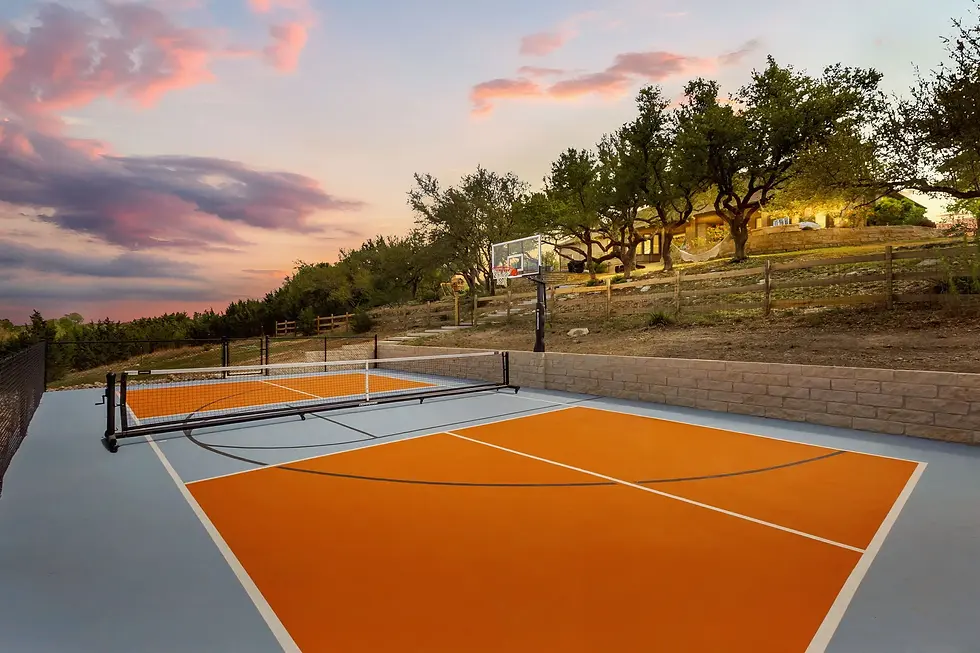
Families vacationing with young kids do better splitting time between one home base and day trips rather than moving hotels every two nights. This is where a Hill Country vacation rental earns its keep. Moulin Rose in Dripping Springs sleeps up to 16 across 5 bedrooms and 4 bathrooms, with a private pickleball court, unheated resort-style pool, hot tub, and a game room stocked with a pool table, foosball, and arcade games, so multi-generational groups have somewhere to land between day trips instead of shuffling between hotel rooms.
Couples looking for something quieter tend to gravitate toward the Hill Country's wine country pace rather than city nightlife. Deep Eddy Vodka's distillery and tasting room sits about 5 minutes from Moulin Rose, and Jester King Brewery, a farmhouse-style brewery known for barrel-aged sour ales, is roughly 14 minutes away, making an afternoon of tastings realistic without a designated driver doing much work.
What Is the Number 1 Tourist Attraction in Texas?
The Alamo in San Antonio is widely regarded as the number one tourist attraction in Texas, drawing more than 1.6 million visitors annually. The site includes a chapel, barracks, gardens, and a small museum documenting the 1836 battle, and it anchors downtown San Antonio alongside the River Walk.
What surprises first-time visitors is how compact the Alamo complex actually is. The chapel and Long Barrack take under an hour to walk through, so most people pair the visit with the River Walk or the nearby Tower of the Americas, a 750-foot observation tower in Hemisfair Park built for the 1968 World's Fair and still the tallest observation tower in Texas. Go early on weekdays. Weekend afternoons in spring and summer draw the thickest crowds, and the plaza offers little shade.
For context on how the Alamo fits into a broader itinerary, the San Antonio Missions extend the story south of downtown. Four additional missions, Concepcion, San Jose, San Juan, and Espada, form the Mission Trail and together with the Alamo make up the state's only UNESCO World Heritage Site. Cyclists can ride the full Mission Trail on a paved path, a detail most first-time visitors never hear about because tour buses only stop at the Alamo itself.
What Is the Most Visited Place in Texas?
San Antonio's River Walk and Alamo corridor is the most visited place in Texas, drawing millions of downtown visitors annually on top of the Alamo's own 1.6 million-plus count. The River Walk itself stretches 15 miles along the San Antonio River, connecting hotels, restaurants, and attractions like the Historic Pearl district.
Austin runs a close second in raw visitor volume. According to Evolve, Austin attracts over 30 million visitors each year, a figure driven heavily by its live music reputation, its status as a South by Southwest and Austin City Limits Music Festival host city, and its role as the primary Hill Country gateway. Unlike San Antonio's history-driven visits, Austin pulls a mix of festival-goers, food tourists, and outdoor recreation travelers heading to spots like McKinney Falls State Park, about 20 minutes from downtown.
As of 2026, AirDNA data shows Austin has 17,038 active short-term rental listings, with hosts earning an average of $31,862 per year and an average daily rate of $263. That volume of inventory reflects just how much of Austin's visitor traffic books rentals over hotels, particularly groups traveling for weddings, reunions, and bachelorette trips who need more space than a standard hotel room provides. If you're weighing a rental against a hotel for a group trip, our guide on whether a vacation rental is worth it for your group breaks down the math in more detail.
What Makes the Texas Hill Country Worth a Dedicated Trip?
The Texas Hill Country is a limestone-hill region west of Austin and San Antonio known for wineries, German-founded towns, and swimming holes fed by spring-fed rivers. It's worth a dedicated trip because it delivers a slower pace and genuine outdoor scenery that neither Austin's downtown nor San Antonio's historic core can offer.
Fredericksburg, founded by German immigrants in the 1840s, still shows that heritage in its architecture and in bakeries along Main Street. Enchanted Rock Natural Area, about 17 miles north of Fredericksburg, centers on a massive pink granite dome that visitors can climb for panoramic Hill Country views; go for sunrise if you want the summit without a crowd, since midday parking fills fast on weekends and the park sometimes closes entry once capacity is reached.
New Braunfels, closer to San Antonio, built its reputation on the Comal and Guadalupe rivers. Tubing here runs roughly May through September, and Schlitterbahn Waterpark draws families all summer. Natural Bridge Caverns and the Gruene Historic District, a preserved 19th-century townsite with a dance hall still in operation, round out a full day trip.
Dripping Springs sits closer to Austin and leans into a quieter version of Hill Country life. It's the base for Sunset Canyon, an upscale residential community of rolling hills and estate-sized lots where Moulin Rose is located, about 30-35 minutes from downtown Austin. Guests here are typically 10-15 minutes from wedding venues like Camp Lucy and breweries like Jester King, making it a favorite home base for wedding parties who don't want a long drive between getting-ready and the ceremony. For more on the area's venue density, see our roundup of wedding venues in Dripping Springs.
How Should You Plan a Hill Country Wine and Brewery Day?
A realistic Hill Country wine day covers 2-3 stops, not 5, because tasting rooms space themselves apart and most groups underestimate drive time between them. Booking a designated driver or a rental with a base close to multiple wineries solves this without much planning.
From a Dripping Springs base, Deep Eddy Vodka sits about 5 minutes away, and Jester King Brewery, known for its farmhouse ales aged in oak barrels, runs about 14 minutes. Vespa Rossa, an Italian spot popular for date nights, is closer still at roughly 3 minutes. Building a loop around a single base rather than driving back into Austin between stops saves an hour or more of driving each way.
What Are the Best Big City Destinations Beyond Austin and San Antonio?
Houston and Dallas-Fort Worth round out Texas's major-city destinations, each offering a different draw: Houston for space history and museums, Dallas-Fort Worth for Western heritage and arts districts. Both cities work best as 2-3 day stops rather than week-long bases, since their attractions cluster into distinct neighborhoods rather than sprawling across the metro.
In Houston, Space Center Houston anchors the city's identity as the home of NASA's Johnson Space Center, while the Houston Museum of Natural Science covers everything from paleontology to a butterfly center. For food, Goode Company BBQ has served smoked brisket, sausage, and jalapeño cheese bread since 1977, a Houston institution that predates most of the city's current skyline. The Visit Houston Urban Cowboy itinerary also points to Sam Houston Park and the boot and Western wear shops downtown for a half-day of city history.
Dallas-Fort Worth splits into two distinct personalities. Dallas carries the Sixth Floor Museum at Dealey Plaza, documenting the 1963 Kennedy assassination, and Pioneer Plaza's bronze cattle drive sculpture downtown. Fort Worth leans into its Stockyards heritage with twice-daily cattle drives and honky-tonks. Neither city requires more than a long weekend unless you're combining it with a Cowboys or Rangers game.
What Are the Best State and National Parks to Visit in Texas?
Texas's standout parks range from Big Bend National Park's desert wilderness to Palo Duro Canyon's dramatic rock formations, and most sit far enough from major cities that they demand dedicated trip planning rather than a day-trip mindset. As of 2026, several of these parks remain underused relative to their scenery, largely because of the distances involved.
Big Bend National Park spans roughly 800,000 acres along the Rio Grande and the U.S.-Mexico border, home to around 600 species of birds, mammals, reptiles, and amphibians. Santa Elena Canyon inside the park has walls rising 1,500 feet, and the park's remoteness gives it some of the darkest night skies in the country, a genuine draw for stargazers who plan trips around new moon dates. Activities range from single-day hikes to multi-day Rio Grande rafting trips lasting up to three weeks. Confirm current backcountry permit requirements and road conditions with the National Park Service before you go, since summer heat closures and river levels shift year to year.
Palo Duro Canyon State Park, near Amarillo and Canyon in the Panhandle, is the second-largest canyon in the United States, with rock layers descending 500 feet to the canyon floor. It gets a fraction of Big Bend's name recognition despite being far more accessible for a Panhandle road trip.
Closer to Austin, McKinney Falls State Park sits about 20 minutes from downtown and offers hiking, mountain biking, camping, and swimming without the multi-hour drive Big Bend or Palo Duro require. Enchanted Rock, covered above in the Hill Country section, fills a similar role for San Antonio and Austin travelers who want a real hike without giving up a weekend.
Which Lesser-Known Parks Deserve More Attention?
Several state parks documented by Texas Parks and Wildlife get consistently overlooked in favor of the same five or six marquee destinations. Palmetto State Park, about an hour from both San Antonio and Austin, offers fishing on Oxbow Lake, canoeing on the San Marcos River, and birding in a swampy, subtropical landscape that feels unlike anywhere else in the Hill Country.
Muleshoe Bend Recreation Area near Spicewood covers 654 acres with almost 10 miles of trails for hiking, biking, and horseback riding, and it sits close enough to Austin for a half-day trip. Out west, Franklin Mountains State Park near El Paso is the largest state park located within a city, with 125 miles of mountainous trails, while Guadalupe Mountains National Park, about 100 miles from El Paso, includes nearly 47,000 acres of designated wilderness and roughly 80 miles of trails. Hueco Tanks State Park & Historic Site, about 40 miles east of El Paso, and Monahans Sandhills State Park, roughly 250 miles away near Midland and Odessa, round out a West Texas loop that most itineraries skip entirely in favor of Big Bend alone.
What Are the Best Gulf Coast Destinations in Texas?
The Texas Gulf Coast runs from Port Arthur near the Louisiana border down to South Padre Island, with Galveston serving as the most accessible beach destination for Houston and inland travelers. Galveston's Historic Pleasure Pier offers boardwalk rides over the water, while the Aquarium at Moody Gardens and the Galveston Historic Seaport, home to the 1877 tall ship Elissa, add museum-style stops between beach days.
Port Arthur sits on Sabine Lake, a 90,000-acre saltwater estuary on the Texas-Louisiana border, a spot that draws far more anglers than beachgoers and rarely appears on standard Gulf Coast lists despite the fishing access. South Padre Island, much further south, is the state's premier barrier island beach destination and pulls a younger, livelier crowd than Galveston's more family-oriented pace.
Corpus Christi and Port Aransas fill the gap between Galveston and South Padre, both offering easier parking and shorter drives from San Antonio than the more distant South Padre trip requires. Coastal humidity and hurricane season, roughly June through November, are worth checking before booking, since storm activity can disrupt Gulf Coast plans with little notice.
What Should You Know About Lesser-Known East Texas Towns?
East Texas towns like Caddo Lake, Waco, Denton, and Weatherford offer a different Texas experience than the Hill Country or Gulf Coast, built around cypress swamps, small-town squares, and college-town energy rather than beaches or wineries. These destinations get far less coverage in most "best of Texas" content despite genuine appeal for travelers who've already hit the marquee cities.
Caddo Lake, straddling the Texas-Louisiana border, is one of the only natural lakes in Texas, defined by moss-draped cypress trees and a genuinely eerie, quiet paddling experience. Waco has built a modern tourism identity around home renovation media and now draws day-trippers from both Austin and Dallas. Denton, a college town north of Dallas-Fort Worth, carries a live music scene disproportionate to its size, largely because of its university population. Weatherford and Nocona lean into small-town Texas character, courthouse squares, antique shops, and the kind of slower pace that a Dallas-Fort Worth day trip can't replicate.
None of these towns demand a dedicated multi-day trip on their own, but they work well as one- or two-night detours between larger destinations, especially for travelers who've already covered Austin, San Antonio, and Houston on previous trips.
How Do You Plan a Texas Itinerary by Trip Length?
A Texas itinerary should scale to available time: 3 days for a single-region focus, 5-6 days for the classic San Antonio-Hill Country-Austin loop, 7-10 days to add Houston or the Gulf Coast, and two weeks or more to include West Texas destinations like Big Bend. Trying to cover the whole state in under a week leads to more driving than sightseeing.
Trip Length | Suggested Route | Approx. Driving | Best For |
3 days | San Antonio + Hill Country day trip | 1-2 hours total | First-timers, weekend trips |
5-6 days | San Antonio to Hill Country to Austin | 3-4 hours total | Classic first Texas vacation |
7-10 days | Add Houston or the Gulf Coast to the above loop | 6-8 hours total | Families, food and beach mix |
10-14 days | Add Dallas-Fort Worth and a West Texas detour | 12+ hours total | Repeat visitors, road trip lovers |
For groups planning the 5-6 day Hill Country loop specifically, staying in one rental base near Dripping Springs or East Austin cuts down on packing and unpacking between cities. Our guide to day trips from Austin maps out exactly which Hill Country stops fit into a single day versus which need an overnight.
What Are the Realistic Accessibility and Family Planning Details Most Guides Skip?
Family and accessibility planning in Texas varies dramatically by destination: state parks like McKinney Falls and Enchanted Rock have marked accessible trails and swimming areas, while backcountry sections of Big Bend and Guadalupe Mountains have no paved access and limited cell service. Checking trail difficulty and reservation requirements before arrival avoids the most common planning mistakes.
Summer heat is the biggest overlooked risk. Texas summer temperatures regularly exceed 100 degrees in Central and West Texas, and Big Bend's desert terrain offers little shade on most trails. Plan hikes for early morning, carry more water than feels necessary, and check for heat advisories, particularly June through September. Enchanted Rock closes to new entries once its parking capacity fills, so arriving by 9am on weekends avoids a wasted drive.
For families traveling with strollers or younger kids, swimming holes like Barton Springs in Austin and the Comal River in New Braunfels have gentler, more accessible entry points than river rafting stretches in Big Bend. Rentals with dedicated kid infrastructure also make a real difference on multi-day family trips. Moulin Rose includes a children's playscape, a slip and slide, and a fenced yard, features that let parents relax poolside while kids stay contained in view, something most Hill Country hotel stays simply can't offer.
Why Book a Vacation Rental Over a Hotel for a Texas Group Trip?
A vacation rental works better than multiple hotel rooms for Texas group trips because it keeps everyone under one roof with shared kitchen and living space, typically at a lower per-person cost than booking 4-6 separate hotel rooms. This matters most for the bachelorette parties, family reunions, and wedding groups that make up a large share of Hill Country and Austin travel.
At Cortado Stays, we host groups of 12 and 16 every week in East Austin and Dripping Springs, and the number one complaint we hear from first-time renters is splitting a group across two Airbnbs because they couldn't find one big enough. Moulin Rose solves that at the top end, sleeping up to 16 guests across 5 bedrooms and 4 bathrooms, with a private pickleball court, unheated pool, hot tub, fire pit, and a game room with pool table, foosball, and arcade games for evenings when nobody wants to drive anywhere.
Booking direct through cortadostays.com also saves up to 10% on fees compared to third-party platforms like Airbnb or VRBO, and guests get free late checkout until noon when there's no same-day arrival. For weddings specifically, Moulin Rose is vendor-friendly with a Certificate of Insurance available, a detail that matters if you're hosting a rehearsal dinner or getting-ready session on-site. For more on the tradeoffs, our piece on whether a vacation rental is worth it for your group walks through the math against comparable hotel blocks.

What Time of Year Is Best to Visit Texas?
Spring, specifically March through May, is the best overall window to visit Texas, with bluebonnet season peaking around early April in the Hill Country and mild temperatures across most regions. October and November form a strong secondary window, with cooler weather returning after the summer heat breaks.
Summer, June through August, brings the state's hardest heat, particularly in Central Texas, San Antonio, and West Texas, where daytime highs regularly clear 100 degrees. It's still the peak season for Gulf Coast beach trips and river tubing in New Braunfels, since the water itself provides relief the inland destinations can't match. Winter is mild by national standards but brings occasional ice events that can shut down highways for a day or two, particularly in North Texas.
For Hill Country specifically, seasonal rental data backs up the spring and fall preference. AirROI's 2026 analysis of the Dripping Springs market identifies March, July, and October as peak-demand months, with average occupancy around 39.2% and average daily rates near $397, compared to a low season in January, February, and August averaging 28.6% occupancy. That gap of roughly 10.6 percentage points reflects how much wedding season and wildflower travel drive Hill Country demand in spring and fall specifically.
How Do You Choose Which Texas Region Fits Your Trip?
Choosing a Texas region comes down to matching your group's priorities against what each area actually delivers: history and walkability favor San Antonio, live music and food favor Austin, remote wilderness favors West Texas, and beach access favors the Gulf Coast. Most planning mistakes come from trying to force one region to deliver an experience it isn't built for.
A common mistake is pairing a Big Bend trip with a short weekend. The park's remoteness, often 4-6 hours from the nearest major airport, makes it a poor fit for anything shorter than 3-4 dedicated days. Another frequent misstep: booking a downtown Austin hotel for a bachelorette weekend, then discovering 6th Street's crowds and cover charges eat into the budget fast. A rental base in East Austin or Dripping Springs, further from the strip but closer to the actual experience most groups want, usually solves this.
Groups torn between city energy and Hill Country quiet don't have to pick just one. Staying in Dripping Springs puts you about 30-35 minutes from downtown Austin, close enough for a night out but far enough to sleep somewhere quiet afterward. That's the exact tradeoff Moulin Rose is built around, and it's worth reading our full Dripping Springs vacation rental guide if you're still weighing Austin versus Hill Country for a group trip.
Frequently Asked Questions
What are the top 5 places to visit in Texas?
The top five are San Antonio, Austin, Houston, the Texas Hill Country, and the Gulf Coast beach towns around Galveston and South Padre Island. San Antonio leads with the Alamo and the UNESCO-listed Mission Trail, while Austin combines live music with Hill Country access.
What is the number 1 tourist attraction in Texas?
The Alamo in San Antonio is generally considered the top attraction, with more than 1.6 million annual visitors. It sits at the center of downtown San Antonio, walkable to the River Walk and the Historic Pearl district.
How many days do you need to see Texas properly?
A meaningful first trip needs at least 5-6 days for the San Antonio to Hill Country to Austin loop. Adding Houston, the Gulf Coast, or West Texas destinations like Big Bend pushes a comprehensive trip to 10-14 days, since driving distances between regions are substantial.
Is the Texas Hill Country worth visiting outside of Austin?
Yes. The Hill Country offers wineries, German heritage towns like Fredericksburg, and swimming holes in New Braunfels that Austin's city core doesn't replicate. Dripping Springs, about 30-35 minutes from downtown Austin, is one of the quieter Hill Country bases with wedding venues, wineries, and breweries all within a 10-15 minute drive.
What is the best time of year to see Texas bluebonnets?
Bluebonnet season typically peaks around early April in the Hill Country, though the exact timing shifts slightly year to year based on winter rainfall. March through mid-April is the safest window for wildflower photography around Fredericksburg and the backroads near Dripping Springs.
Is Big Bend National Park worth the long drive?
Yes, for travelers with at least 3-4 dedicated days. Big Bend's roughly 800,000 acres include Santa Elena Canyon's 1,500-foot walls and some of the darkest night skies in the country, but its remoteness makes it a poor fit for a short weekend trip.
Should groups book hotels or a vacation rental for a Texas trip?
Large groups of 8 or more generally save money and gain shared living space by booking one vacation rental instead of multiple hotel rooms. Properties like Moulin Rose in Dripping Springs, which sleeps up to 16, also include amenities like a pool, hot tub, and game room that hotels can't match for group gatherings.
Final Thoughts on Planning Your Texas Trip
Texas rewards travelers who pick a region and go deep rather than trying to hit every marquee city in one trip. San Antonio's Alamo and River Walk, Austin's music and food scene, the Hill Country's wineries, and Big Bend's dark skies each deserve their own dedicated time, not a rushed afternoon squeezed between drives.
For 2026 travelers building a Hill Country-anchored itinerary, Dripping Springs remains one of the smartest home bases in the state: close enough to Austin for a night out, quiet enough to actually unwind, and centered among the wineries and wedding venues that make the region worth the visit in the first place.
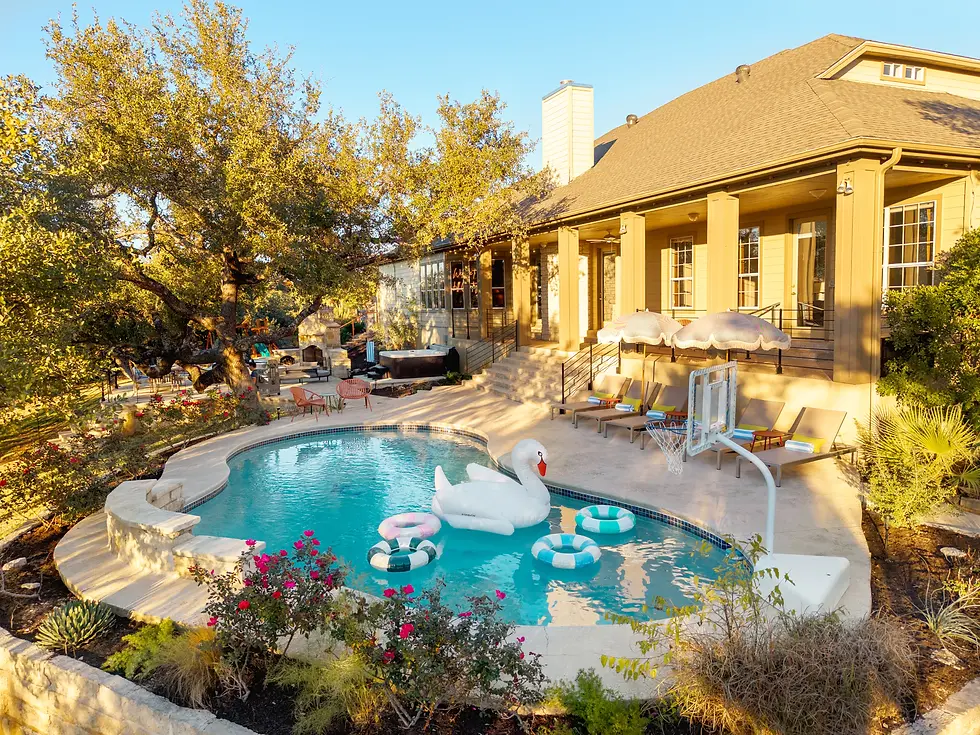
If your Texas trip centers on the Hill Country wineries, breweries, and wedding venues covered in this guide, Moulin Rose puts your whole group 10-15 minutes from spots like Jester King Brewery and Camp Lucy, with a private pool and pickleball court to come back to at the end of the day. Check availability at Moulin Rose here.
Written by Alicia, Owner & Founder at Cortado Stays
Content powered by inkSTR.co


Comments