

Airbnb Austin: The Local's Guide to Booking Right in 2026

Booking an Airbnb Austin stay in 2026 means choosing between roughly 15,690 vacation rentals listed on Airbnb's own Austin landing page, with 8,510 of those categorized as full houses, according to Airbnb's Austin search data. The neighborhood you pick matters more than the platform you book on: East Austin puts you steps from Franklin Barbecue, South Congress trades walkability for retro shopping, and Rainey Street means nightlife noise until 2 a.m. whether you want it or not.
Key Takeaways
Austin has approximately 14,659 active short-term rental listings as of 2026, with a trailing-twelve-month occupancy rate of 57.7% and an average daily rate of $225, according to StaySTRA's 2026 Austin market report.
East Austin, Downtown, and Central Austin command the highest three-bedroom-plus rates at $280 to $380 a night, per MagicBNB's 2026 neighborhood pricing breakdown.
Austin requires every short-term rental to carry a city operating license, and as of July 1, 2026, booking platforms must verify license status and remove unlicensed listings on the city's request, per StaySTRA.
SXSW in March is Austin's single highest-revenue period, with occupancy climbing to 95% or higher and nightly rates running four to eight times baseline, according to MagicBNB.
Guests who book direct with an operator return at a 28.3% rate, compared to just 8.9% for guests who book through Airbnb, according to 2026 hostAI data.
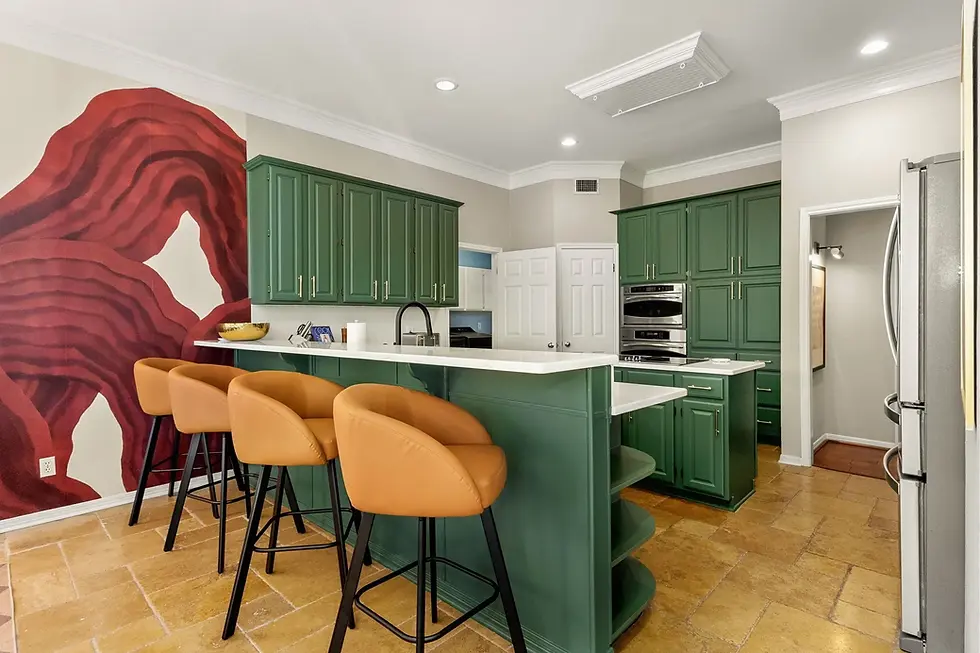
Cortado Villa, a 4-bedroom, 3.5-bath modern farmhouse in East Austin that sleeps up to 12, sits 0.3 miles from Franklin Barbecue and 0.1 miles from Arbor Food Park.
Searching "Airbnb Austin" in 2026 pulls up thousands of listings ranging from downtown high-rise condos to Hill Country farmhouses forty minutes outside the city limits. That volume is a problem as much as a benefit. Without knowing which neighborhoods actually fit your trip, you can end up paying Rainey Street prices for a place with no walkable nightlife, or booking a "central" listing that's really a 25-minute rideshare from anything.
This guide breaks down what matters for a 2026 Austin booking: which neighborhoods fit which kind of trip, how to verify a listing is legally licensed before you pay a deposit, what nightly rates actually look like by season and bedroom count, and where the licensing rules changed enough to affect your booking. We also cover Cortado Villa, our own East Austin property, because when readers ask where to stay for a group of up to 12, we have direct, specific answers rather than a generic sales pitch.
Austin drew more than 30 million out-of-market visitors in the period covered by Visit Austin's tourism report, generating roughly $11.1 billion in economic impact and supporting close to 148,000 hospitality jobs. That volume explains why nightly rates swing so hard around SXSW, ACL, and Formula 1 weekends, and why booking strategy matters more here than in a smaller market.
What Part of Austin Is Best for an Airbnb?
The best Austin neighborhood for a short-term rental depends on whether you prioritize walkability, nightlife access, or quiet. East Austin offers the strongest balance for most groups: it's walkable to major food destinations, a short trip to downtown, and quieter after 10 p.m. than Rainey Street or 6th Street.
East Austin has become the city's most talked-about neighborhood for good reason. It's home to Franklin Barbecue, the smokehouse that draws lines before it even opens, plus the Arbor Food Park's rotating trailers and Paperboy's breakfast tacos. A property here puts you within a mile of the Moody Center, UT's campus, and the Longhorns' football stadium, without the hotel-district price premium.
South Congress, by contrast, trades some walkability for retro shopping and live music heritage. Viator notes the corridor has been central to Austin's identity since the city's 1839 founding, and it still delivers on boutiques and bars, but parking is scarce and weekend foot traffic gets dense fast. Rainey Street is the opposite tradeoff entirely: bungalow-turned-bar walkability but noise until closing time, every night of the week.
For families or corporate groups who want quiet, North Austin's suburbs and the Brewery District (six breweries plus a cidery, per local guides, with Metro access from downtown) offer lower rates and a calmer pace, at the cost of a longer drive to major attractions.
Neighborhood Comparison for Austin Short-Term Rentals
Neighborhood | Best For | Walkability | Nightlife Noise | Typical 2BR ADR (2026) |
East Austin | Groups, foodies, bachelorette parties | High to nearby food/attractions | Moderate, quieter by 11pm | $200-$270 |
South Congress/Zilker | Couples, shoppers, outdoor access | High but crowded weekends | Low to moderate | $180-$255 |
Rainey Street/Red River | Nightlife-first groups | Very high | High, late nights | $210-$280 |
North/South Suburbs | Budget, families, corporate | Low, car-dependent | Low | $130-$175 |
Rates above reflect MagicBNB's 2026 neighborhood-level pricing bands and vary by season and event calendar.
Are Airbnbs Cheaper Than Hotels in Austin?
Airbnb rentals are typically cheaper than hotels in Austin per person when a group splits a multi-bedroom home, though per-night rates on a single listing can match or exceed hotel rooms during peak events. A house with four bedrooms divided among ten to twelve guests usually costs less per head than booking four separate hotel rooms.
Austin's average short-term rental daily rate sits at $225, per StaySTRA's 2026 data, and AirDNA's Austin market page separately reports an average daily rate of $265.60 with 54% occupancy. Both figures track a single listing, not a per-person cost. Split $225 to $300 a night across eight to twelve guests and the math favors a rental fast, especially compared to downtown hotel rates during SXSW or Formula 1 weekend, when hotel rooms can double or triple in price.
Where hotels win: solo travelers, one-night business stops, and guests who want daily housekeeping without asking. Where rentals win: any group of six or more, multi-night stays where a kitchen saves restaurant costs, and trips centered on togetherness rather than room service. A family reunion or bachelorette weekend for twelve almost always comes out ahead in a house with a full kitchen and shared living space instead of four separate hotel rooms.
Don't forget the total cost math either. Austin's Hotel Occupancy Tax runs 11% (a 9% city occupancy tax plus a 2% venue project tax), and Texas adds a separate 6% state hotel occupancy tax on top, according to Avalara's MyLodgeTax summary. That tax applies to short-term rentals the same way it applies to hotel rooms, so factor it into your total before comparing sticker prices.

What Is Everyone Using Instead of Airbnb?
Travelers comparing options beyond Airbnb typically look at Vrbo, direct-booking property websites, and platforms like Expedia vacation rentals or Marriott Homes & Villas. None of these fully replace Airbnb; most travelers use them alongside it to compare pricing and inventory before booking.
VRBO remains the closest direct alternative, with a similar search-and-book model and comparable inventory in most Austin neighborhoods. Aggregators like Hometogo pull listings from multiple platforms at once, which helps with price comparison but adds an extra booking layer. AvantStay and similar management companies operate their own curated portfolios, often skewing toward larger, design-forward homes rather than budget studios.
The option most Austin frequent flyers actually use, and the one we'd point you to first: booking directly through the property owner's own website. Direct booking through cortadostays.com, for example, saves guests up to 10% on fees compared to going through a third-party platform, and includes free late checkout until noon when there's no same-day arrival scheduled. The 2026 hostAI data backs this preference up broadly: guests who book direct return at a 28.3% rate, nearly three times higher than the 8.9% return rate for Airbnb bookings. A separate hostAI analysis via CUFinder found that guests are creatures of habit either way, with about 86% of direct bookers rebooking the same channel and nearly 89% of Airbnb-sourced guests rebooking on Airbnb, which is exactly why the first booking decision matters so much.
Where Should You Avoid Staying in Austin?
The parts of Austin worth approaching carefully for a short-term rental are far East Riverside near the airport corridor for walkability-focused trips, and any listing advertised as "steps from 6th Street" without a clear address, since 6th Street proper has minimal short-term rental inventory and heavy street noise. Downtown high-rises can also disappoint groups expecting outdoor space, since most are condo units with no yard, pool, or parking included.
None of this means those areas are bad places to visit. It means matching the listing to your trip. A listing thirty minutes from downtown with no walkable food or nightlife nearby isn't a deal breaker for a quiet family trip, but it's a mismatch for a bachelorette weekend that wants to walk to dinner. Always check the actual pin location on a map before booking, not just the neighborhood name in the title, since "East Austin" listings can range from a half-mile from Franklin Barbecue to three miles east near the airport.
Also verify licensing before you pay. Austin Development Services requires every short-term rental to hold a valid operating license, and as of July 1, 2026, booking platforms are required to check license status and pull unlicensed listings when the city flags them, per StaySTRA's market report. A licensed property should be able to provide its license number on request; Cortado Villa's license is OL 2024088078th, registered with the City of Austin, and we list it openly rather than making guests dig for it.
Parking is another overlooked detail. Street parking in much of East Austin is restricted to residential permits between noon and 8 p.m., so confirm a listing has dedicated off-street parking if you're driving. Cortado Villa offers free driveway parking for three vehicles, which matters more than it sounds like once you're trying to park a group of twelve near a popular food corridor.
How Do Austin's Short-Term Rental Rules Actually Work?
Austin defines a short-term rental as any housing unit, or portion of one, rented for fewer than 30 consecutive days, and requires a city operating license before the unit can be advertised or booked, according to Austin Development Services. As of 2026, that license is valid for two years rather than the one-year term used under older rules.
Austin splits licenses into types. Type 1 covers owner-occupied properties and is permitted across all residential zoning districts. Type 2 covers non-owner-occupied rentals, is limited to seven commercial zoning districts, requires a 1,000-foot separation from other Type 2 properties, and is capped at 3% of single-family units within a given census tract, per the city's official summary. Austin Current also reports newer caps limiting multifamily operators to no more than 10% of units, mixed-use sites to one unit or 25% of residential units (whichever is higher), and single-family sites to two short-term rentals per property.
For guests, the practical takeaway is simple: ask for the license number before booking, or check it against the AustinTexas.gov Short-Term Rentals page. A legitimate operator will not hesitate to share it. Operators are also required to maintain a local contact in Central Texas and respond promptly to complaints, per Austin Current's reporting on the current ordinance. Reading the primary Austin City Code / ordinance document is worthwhile if you're booking a longer stay or a vendor-hosted event and want to confirm the rules directly.
Guests should also know that Austin's Hotel Occupancy Tax applies to nearly every short-term stay under 30 days, and since April 1, 2026, platforms that process payment on an operator's behalf are required to collect and remit that tax directly. That shift means the tax line on your Airbnb Austin booking should already reflect this, rather than being something you owe separately later.
What Does Austin's Rental Market Look Like by Season?
Austin's short-term rental pricing swings dramatically around three major events: SXSW in March, ACL Music Festival and Formula 1 in October and November, and University of Texas football weekends from September through November. Rates during these windows can run several times higher than baseline, according to MagicBNB's 2026 seasonal analysis.
SXSW is the single biggest revenue event on the calendar. MagicBNB reports occupancy climbing to 95% or higher during the festival, with nightly rates running four to eight times a property's normal baseline. October brings a second major spike from ACL Music Festival and the Formula 1 U.S. Grand Prix at Circuit of the Americas, with Formula 1 weekends independently producing similarly elevated four-to-eight-times pricing for well-located properties. StaySTRA's data backs this with concrete numbers: March averaged 67.7% occupancy and a $240 ADR, while October ADR reached $253 and November hit $223.
January and February are Austin's softest booking months, per MagicBNB, making them the best window for value-focused travelers willing to skip peak crowds. If your trip is flexible, booking a spring or fall shoulder period, avoiding the exact festival weekends, gets you Austin's better weather without SXSW or F1 pricing attached.
The city's broader tourism numbers explain why this volatility exists at all. Austin-Bergstrom International Airport handled 21.67 million passengers in 2026, its third-busiest year on record, and first-half 2026 traffic rose another 4.58% year over year. June 2026 alone brought 2,102,853 passengers through AUS, a new monthly record. During the 2026 World Cup period, downtown out-of-market foot traffic hit 140,660 daily visitors, a 9% jump over 2026, while citywide hotel occupancy rose 11% and hotel revenue jumped 20% year over year during that same June stretch, according to Downtown Austin Alliance data cited by Axios.
Austin Airbnb Pricing and Occupancy at a Glance (2026)
Metric | 2026 Figure | Source |
Active short-term rental listings | 14,659 | StaySTRA |
Trailing 12-month occupancy | 57.7% | StaySTRA |
Average daily rate (ADR) | $225 (StaySTRA); $265.60 (AirDNA) | StaySTRA / AirDNA |
Average monthly revenue per listing | $2,794 | StaySTRA |
March occupancy (SXSW month) | 67.7%, $240 ADR | StaySTRA |
October ADR (ACL/F1 month) | $253 | StaySTRA |
What Should You Know About Booking a Larger Group House?
A larger group house, generally four bedrooms or more, solves the biggest headache of Austin group travel: splitting into two Airbnbs and losing the point of traveling together in the first place. Groups of ten to sixteen guests should prioritize bathroom-to-guest ratios, dedicated parking, and outdoor space that can hold everyone at once, not just square footage claims in the listing description.
Cortado Villa is a modern farmhouse in East Austin, renovated in 2023, with 4 bedrooms and 3.5 bathrooms sleeping up to 12 guests. Alicia and Ben, the owner-operators, designed it around a private backyard with a 7-person hot tub, a fire pit, and a three-hole putt putt green, all inside a fenced yard. The dining table seats 10, the kitchen bar seats 6 more, and the living room's 75-inch Roku smart TV with Sonos soundbar handles movie nights without anyone hunting for a second TV.
The location does real work here too. Franklin Barbecue sits 0.3 miles away, Arbor Food Park is 0.1 miles, and Rainey Street's nightlife corridor is a 1.5-mile trip if the group wants to head downtown for the evening. UT's campus, the Moody Center, and the Longhorns' football stadium all fall within a mile. That's the walkability East Austin promises, delivered from an actual front door rather than a listing description.
For groups closer to sixteen, our sister property Moulin Rose in Dripping Springs sleeps up to 16 across 5 bedrooms and 4 bathrooms, with a private pickleball court, an unheated resort-style pool, a hot tub, and a game room stacked with a pool table, arcade games, and foosball. It sits 10 to 15 minutes from Hill Country wineries, breweries like Jester King Brewery, and wedding venues, making it the better fit for a wedding party or vendor-hosted celebration that needs a Certificate of Insurance on file.
Whichever size fits your group, book direct if the option exists. Booking through Cortado Stays directly saves up to 10% on fees compared to third-party markups, and includes free late checkout until noon with no same-day arrival, plus flexible early check-in or late checkout for a $150 fee when scheduling allows.

How Should Families and Accessibility-Focused Travelers Plan an Austin Stay?
Families traveling with young kids or travelers who need accessibility features should prioritize fenced yards, pool safety, and ground-floor sleeping options when comparing Austin listings, details that most generic "best of" guides skip entirely. A listing photo showing a pool doesn't tell you whether it's fenced, heated, or safe for a toddler without constant supervision.
Mueller Neighborhood Park is a genuinely strong stop for families, with the Thinkery children's museum, a lake and trail loop with ducks, a dragon-themed playscape, and a Sunday farmers market, per local area guides. It's a better bet than most downtown attractions if you have kids under eight in tow. Pair that with a rental that has its own fenced outdoor space so nap schedules and shoe-free downtime don't depend on a public park's hours.
Cortado Villa's yard is fully fenced, which matters if you're watching multiple kids at once, and the property stocks a Stokke Tripp Trapp highchair and a Pack N Play crib so families don't have to travel with bulky gear. If accessibility is a priority instead, ask directly about step-free entries, walk-in versus step-over showers, and hallway widths, since most Austin-area homes, including ours, were built as standard residential construction rather than to ADA specifications. Always confirm these details directly with the host before booking rather than assuming from listing photos.
One detail almost no Austin travel guide mentions: Central Texas cedar pollen season runs roughly December through February and can be intense for allergy sufleferers, so if you're traveling with someone sensitive to pollen, a spring or fall booking window avoids the worst of it entirely.
How Do You Calculate the Real Cost of an Austin Airbnb Stay?
The real total cost of an Austin short-term rental includes the nightly rate, a cleaning fee, a service fee, Austin's 11% Hotel Occupancy Tax, Texas's separate 6% state hotel tax, and any parking or transportation costs layered on top, a total that rarely matches the headline nightly price shown in search results.
Take a hypothetical four-bedroom East Austin rental at $300 a night for a three-night weekend. That's $900 in base rent, plus a cleaning fee commonly in the $150 to $250 range for a home this size, plus a platform service fee that can run 12% to 16% on third-party sites. Add Austin and Texas hotel occupancy taxes at a combined 17% on the taxable rent, and a $900 base booking can land closer to $1,250 to $1,400 all-in once every line item is included.
Booking direct changes that math. Direct bookings through an operator's own site typically skip the third-party service fee entirely, and Cortado Stays specifically passes along up to 10% savings on fees for direct bookers. That's real money back in a group's pocket, especially split across eight to twelve guests where every $50 saved per person actually shows up in someone's wallet.
Don't forget transportation either. AUS airport sits about 8 miles from East Austin, a 15 to 20 minute drive depending on traffic, and rideshare surge pricing during SXSW or F1 weekends can multiply a normal $20 airport ride several times over. Building a $40 to $60 rideshare buffer per person into your event-weekend budget is realistic, not excessive.
How to Choose the Right Austin Rental for Your Trip
Start with your group size and non-negotiables, then narrow by neighborhood. Follow these steps to avoid the most common Austin booking mistakes:
Confirm the exact bedroom and bathroom count against your guest count. A 3.5-bath home sleeping 12, like Cortado Villa, avoids the morning bathroom bottleneck that ruins group trips.
Check the pin location on a map, not just the neighborhood name in the title. "East Austin" can mean 0.3 miles from Franklin Barbecue or three miles from anything walkable.
Verify the operating license number directly with the host or on the city's site before paying a deposit.
Ask whether parking is included and how many vehicles it covers, especially for groups arriving in multiple cars.
Compare the total cost, including cleaning fees, service fees, and hotel occupancy tax, not just the advertised nightly rate.
Book outside SXSW, ACL, and Formula 1 weekends if budget matters more than event access, since rates in those windows run several times baseline.
Ask about direct-booking discounts before defaulting to a third-party platform's price.
Common mistakes worth avoiding: booking a listing based on photos alone without checking the map pin, assuming a "downtown" listing includes parking, and forgetting that Austin's occupancy tax applies the same way it would at a hotel. If you're planning a specific type of trip, our guides to 33 best activities in Austin for groups and 37 things to do in Austin beyond 6th Street cover the itinerary side once your lodging is locked in.
Frequently Asked Questions
Are Airbnbs cheaper than hotels in Austin?
Per person, yes, especially for groups of six or more splitting a multi-bedroom house instead of separate hotel rooms. Per listing, Austin's average short-term rental rate runs $225 to $265 a night depending on the source, which can match or exceed a hotel room during non-peak weeks, but the math shifts heavily in the rental's favor once you divide cost across a group.
What is everyone using instead of Airbnb in Austin?
Most travelers compare Airbnb against VRBO, Expedia's vacation rental listings, or Marriott Homes & Villas, but a growing share book directly through the property owner's own website to skip platform fees. Direct bookers return to the same operator at a 28.3% rate, according to 2026 hostAI data, nearly three times the 8.9% return rate for Airbnb bookings.
Where should you avoid staying in Austin?
Be cautious of listings advertised as "steps from 6th Street" without a clear address, since that corridor has limited actual rental inventory and heavy nightly noise, and always confirm the exact map pin rather than trusting a neighborhood name alone. Also verify the property holds a valid City of Austin operating license before booking.
What part of Austin is best for an Airbnb?
East Austin offers the strongest overall balance of walkability, food access, and reasonable quiet after 10 p.m., with proximity to Franklin Barbecue, the Arbor Food Park, and UT's campus. Rainey Street suits nightlife-first groups willing to trade quiet for walkable bars, while North Austin suburbs suit budget-focused families who don't need walkable attractions.
Does a short-term rental in Austin need a license?
Yes. Austin Development Services requires every short-term rental, defined as a unit rented for fewer than 30 consecutive days, to hold a valid city operating license before it can be advertised or booked. As of 2026, that license is valid for two years, and guests can ask a host for the license number to confirm it's current.
When is the most expensive time to book an Airbnb in Austin?
SXSW in March is the single most expensive period, with occupancy reaching 95% or higher and nightly rates running four to eight times baseline, according to MagicBNB's 2026 data. October, driven by ACL Music Festival and the Formula 1 U.S. Grand Prix, is the second-most expensive stretch, with average daily rates climbing to $253 that month per StaySTRA.
How many guests can Cortado Villa and Moulin Rose accommodate?
Cortado Villa in East Austin sleeps up to 12 guests across 4 bedrooms and 3.5 bathrooms. Moulin Rose in Dripping Springs sleeps up to 16 guests across 5 bedrooms and 4 bathrooms, with a private pickleball court and unheated pool for larger celebrations.
Conclusion
Booking an Airbnb Austin stay in 2026 comes down to three decisions: the right neighborhood for your trip type, a verified license before you pay, and an honest look at total cost once fees and Austin's 11% Hotel Occupancy Tax are added in. East Austin remains the strongest all-around pick for groups who want walkability without sacrificing quiet, and shoulder-season booking around SXSW, ACL, and Formula 1 keeps costs closer to the market's $225 average daily rate instead of the four-to-eight-times spikes those events bring.
As Austin's airport traffic and tourism numbers keep climbing into 2026, inventory will keep shifting too, which makes verifying licensing and comparing total cost more useful than ever before locking in a booking.

If you're weighing an Airbnb Austin search against booking direct, Cortado Villa puts your group 0.3 miles from Franklin Barbecue with its own fenced backyard, hot tub, and fire pit waiting after a day out. Check availability and pricing here.
Written by Alicia, Owner & Founder at Cortado Stays
Content powered by inkSTR.co


Comments